Maker’s advice
Meditating with the Native American flute: the sound journey
The Native American flute lends itself naturally to meditation: slow breathing, notes that all go together, and a sound that brings you back to the present moment. Here is how I experience it, and how to start at home, even if you don’t play.
By Kévin Truc, Native American style flute maker since 2021 · November 13, 2026 · 6-minute read
In short
Five keys to meditating with the flute
- No need to know how to play: the minor pentatonic scale has no wrong notes.
- Breath first: slow, steady, never forced.
- Long notes: hold each sound, and leave room for silence.
- The drone: on a double or triple flute, a continuous note carries the melody.
- A few minutes a day: five to ten minutes are enough to begin.
My way of playing
What is a sound journey?
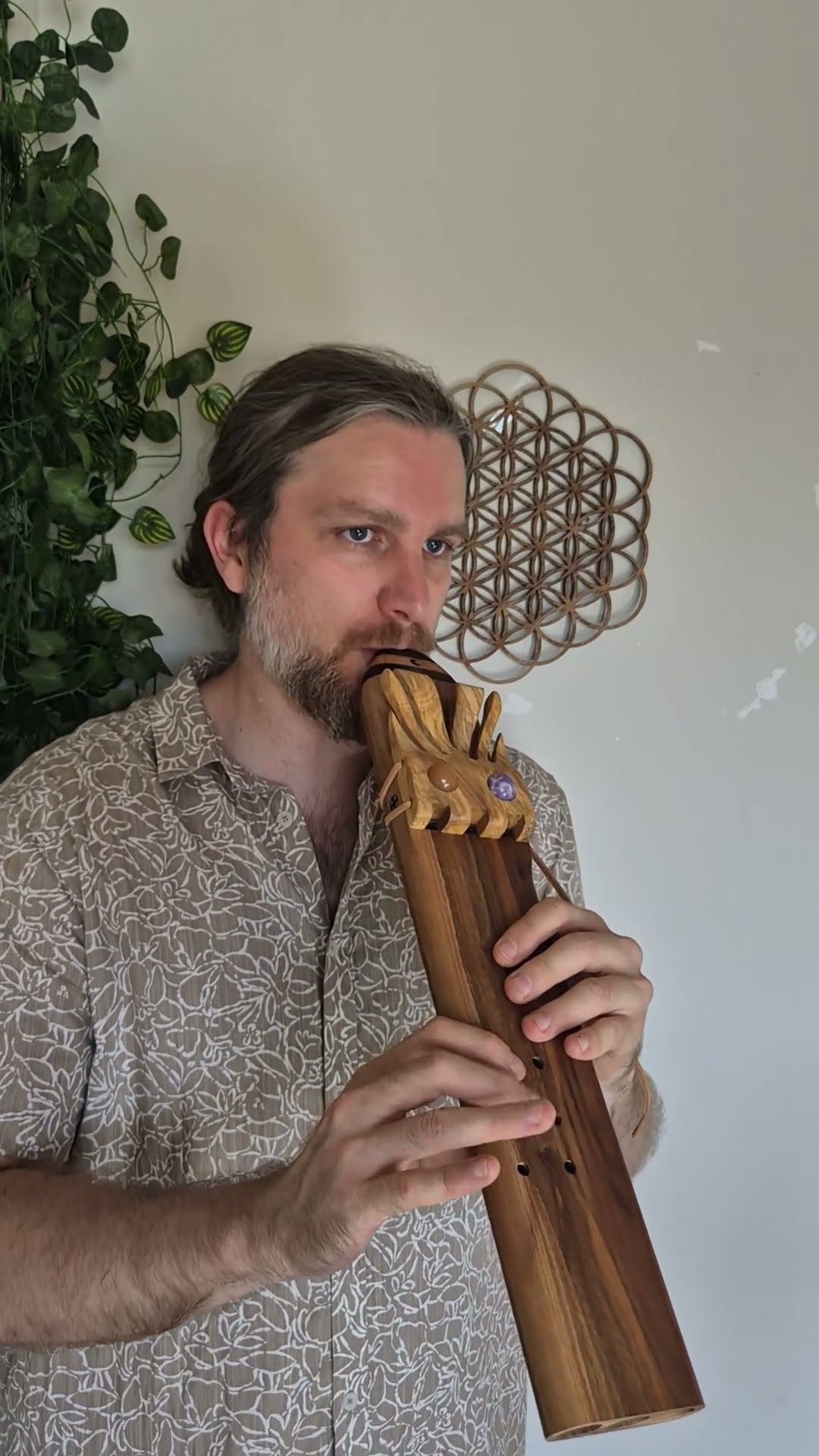
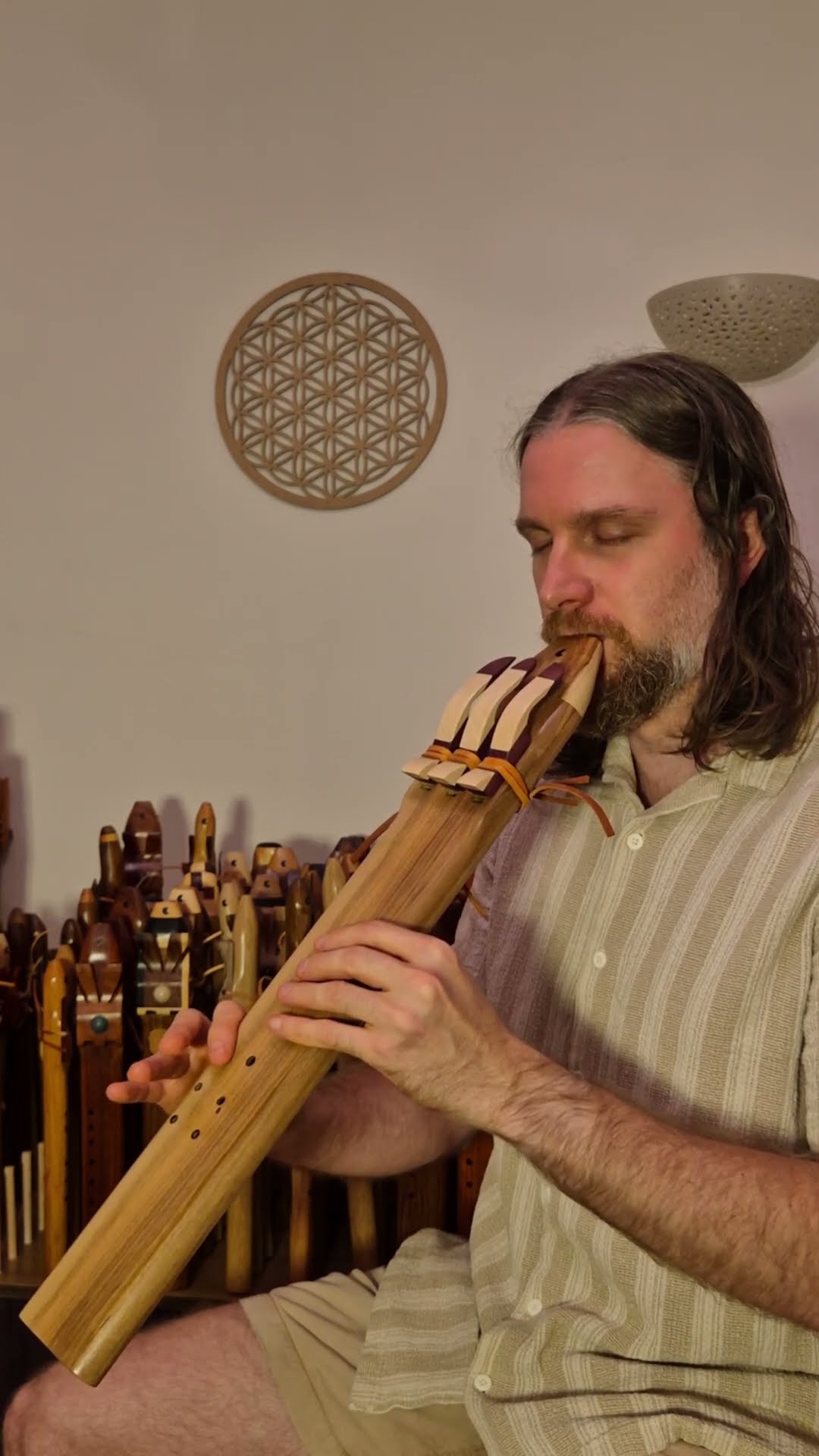
I call a sound journey a slow improvisation, with no sheet music. I close my eyes, let the notes come, hold the sounds for a long time and let the silence answer. There is nothing to get right: you follow your breath, and the music makes itself.
On a triple flute, the journey becomes truly enveloping: the melody sings in the middle, the three low notes answer on the right, and the drone holds the background on the left. Three voices from a single breath, filling the room.
In practice
Meditating with the flute, step by step
- Settle in seated, back straight, the flute resting in your hands.
- Breathe a few times without playing, slowly, into your belly.
- Play a single note, with all the holes covered, and hold it as long as your breath allows, without forcing.
- Leave a silence, listen to the note fade away, then start again.
- Open one hole, then another, once your breath has settled: let a slow melody shape itself.
- Finish with the low note you started with, and stay a moment in the silence.
Five to ten minutes are enough to begin. What matters is regularity, and a breath that never forces.
Choosing well
Which flute for meditation?
- A mid-range single flute, between E and A, to start gently.
- A lower flute, with a round, deep sound: the breath is slower and fuller.
- A double flute, whose drone holds a continuous note beneath the melody, like a soundscape.
- A triple flute, for three truly distinct voices and a sound that fills the whole space.
For the tuning, it’s a matter of ear: many find 432 Hz softer for meditation. If you play with singing bowls or other instruments, choose the same tuning as theirs.
To listen to
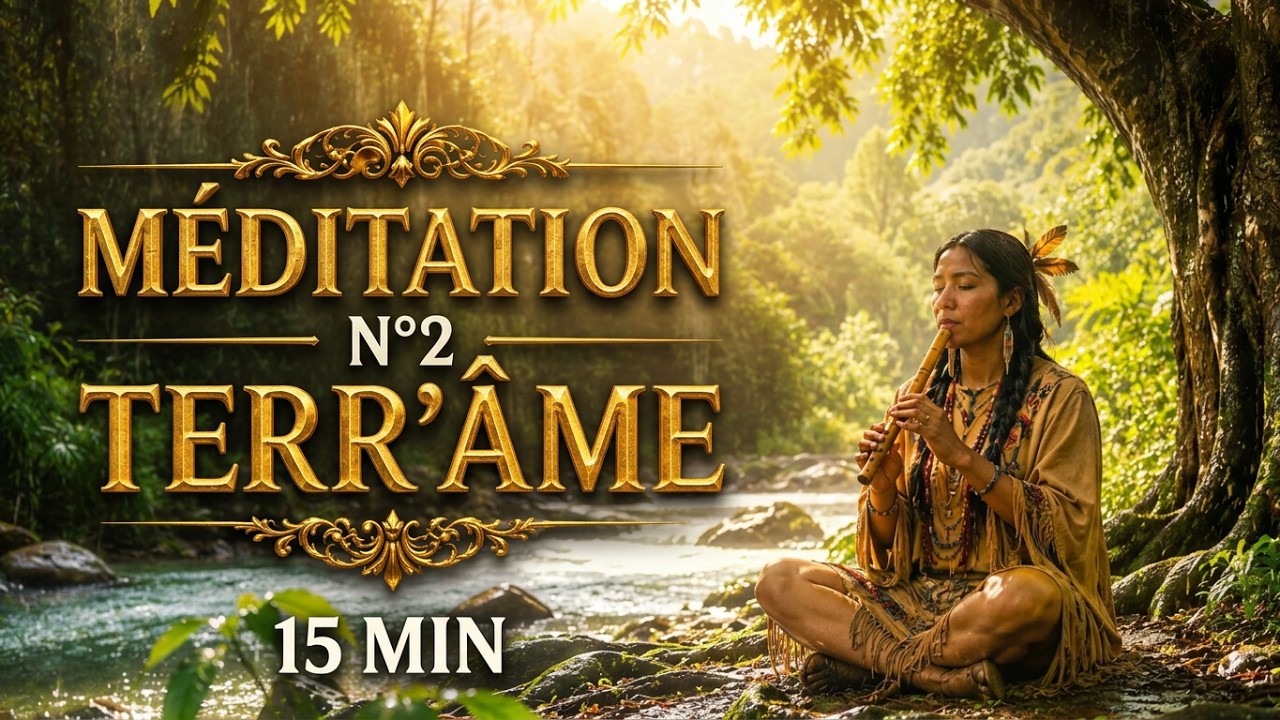
Three 15-minute meditations with Sylvain Guinet
Sylvain Guinet composes for the Native American flute. He recorded a series of 15-minute meditations, on a 432 Hz flute, from his album Terr’Âme. Play one, close your eyes and let yourself be carried; or pick up your flute and play softly along with him.


Your meditation flute
Let’s find the flute that suits you
Tell me how you’d like to play: alone, in meditation, with singing bowls or other instruments. I’ll suggest the key and tuning that will suit you best.
Frequently asked questions
Your questions about meditating with the flute
Another question? Write to me, I answer personally.
Do you need to know how to play to meditate with the Native American flute?
No. Its notes all go together: you can play by instinct, following your breath, without knowing anything about music.
432 Hz or 440 Hz for meditation?
It’s a matter of ear: many find 432 Hz softer for meditation. If you play with bowls or other instruments, choose the same tuning as theirs.
How long should you meditate with the flute?
Five to ten minutes are enough to begin. A short moment every day is better than a long session now and then.
Is a double or triple flute better for meditation?
Their drone holds a continuous note that carries the melody and makes the sound very enveloping. But a single flute is more than enough to begin.
The fingering chart and the guide to your flute
Sign up and receive the workshop’s two PDFs (in French): fingerings for all 12 keys, adjusting the totem, and care. Then, about once a month: new flutes before anyone else, a free score by Siyotanka, a composer for the Native American flute, and the workshop’s new videos.