
The workshop shop
Native American style double flutes
One breath, two voices singing together: the melody under your fingers, and the drone that carries it. I make each double flute by hand, from the wooden plank to the first note, in my workshop in the Vaucluse, in Camaret-sur-Aigues, France.
Available and already sold
The workshop’s double flutes
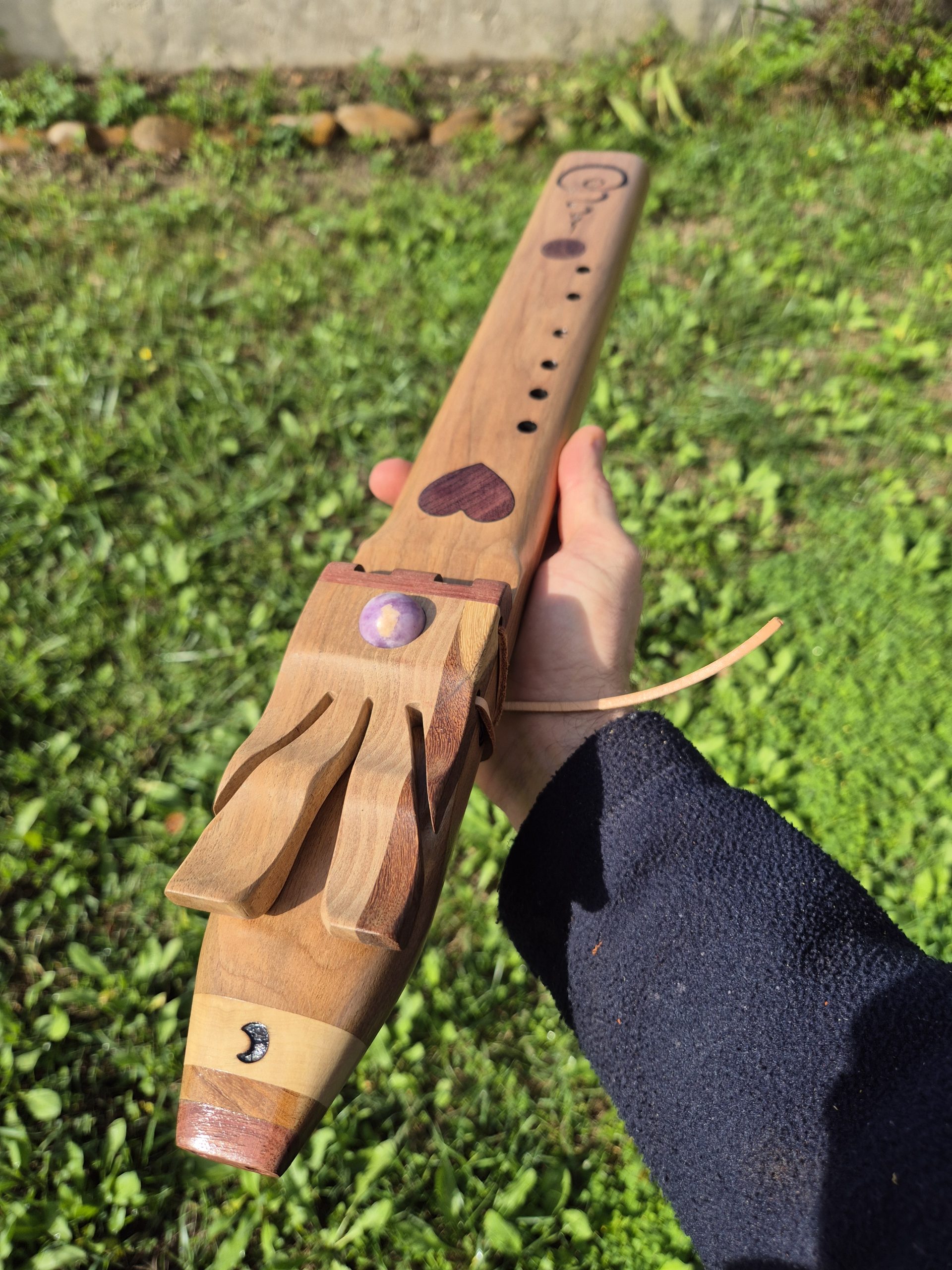 Double
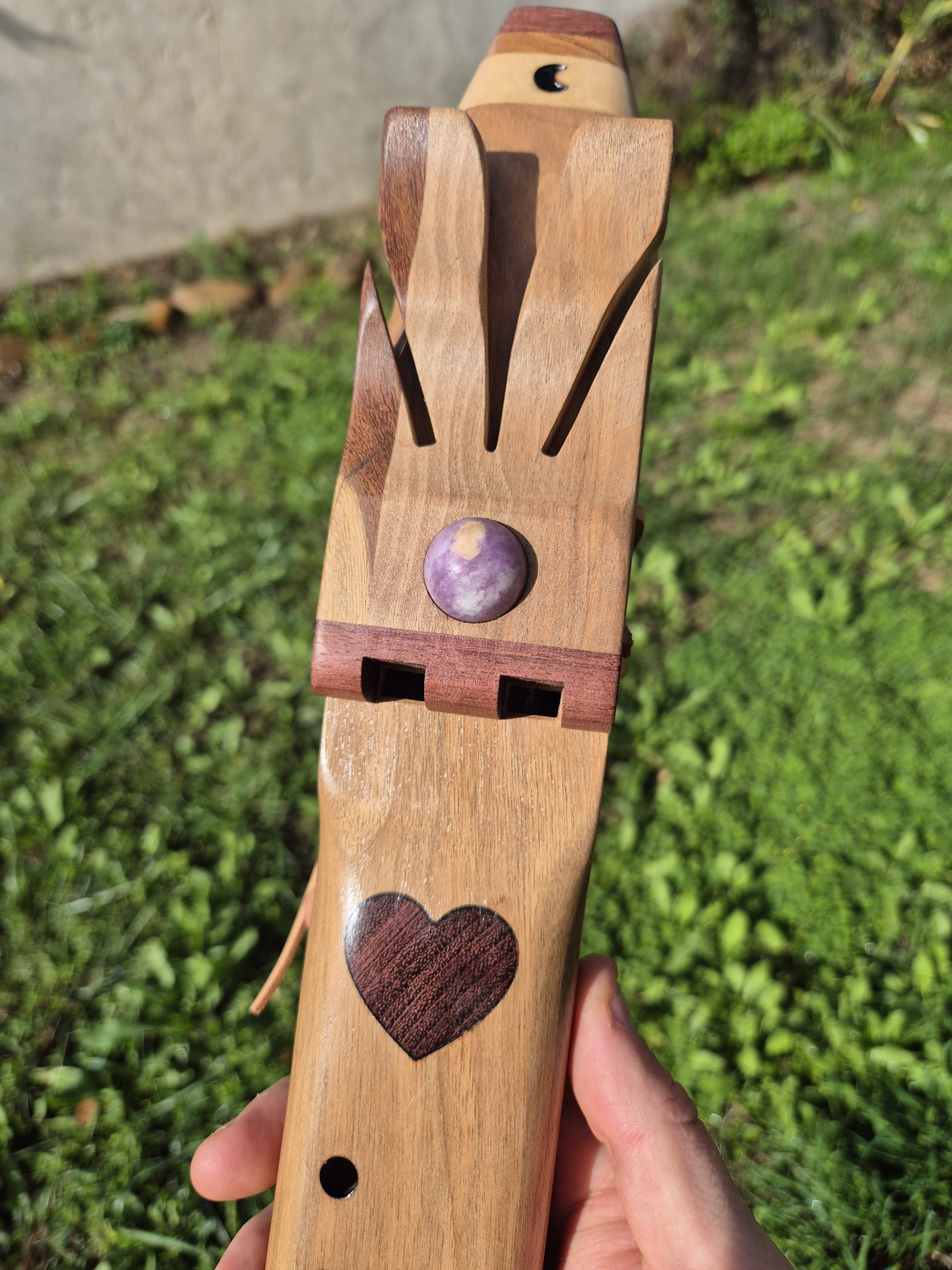
G 440 HzDouble flute
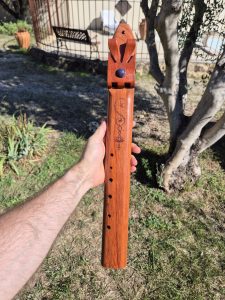
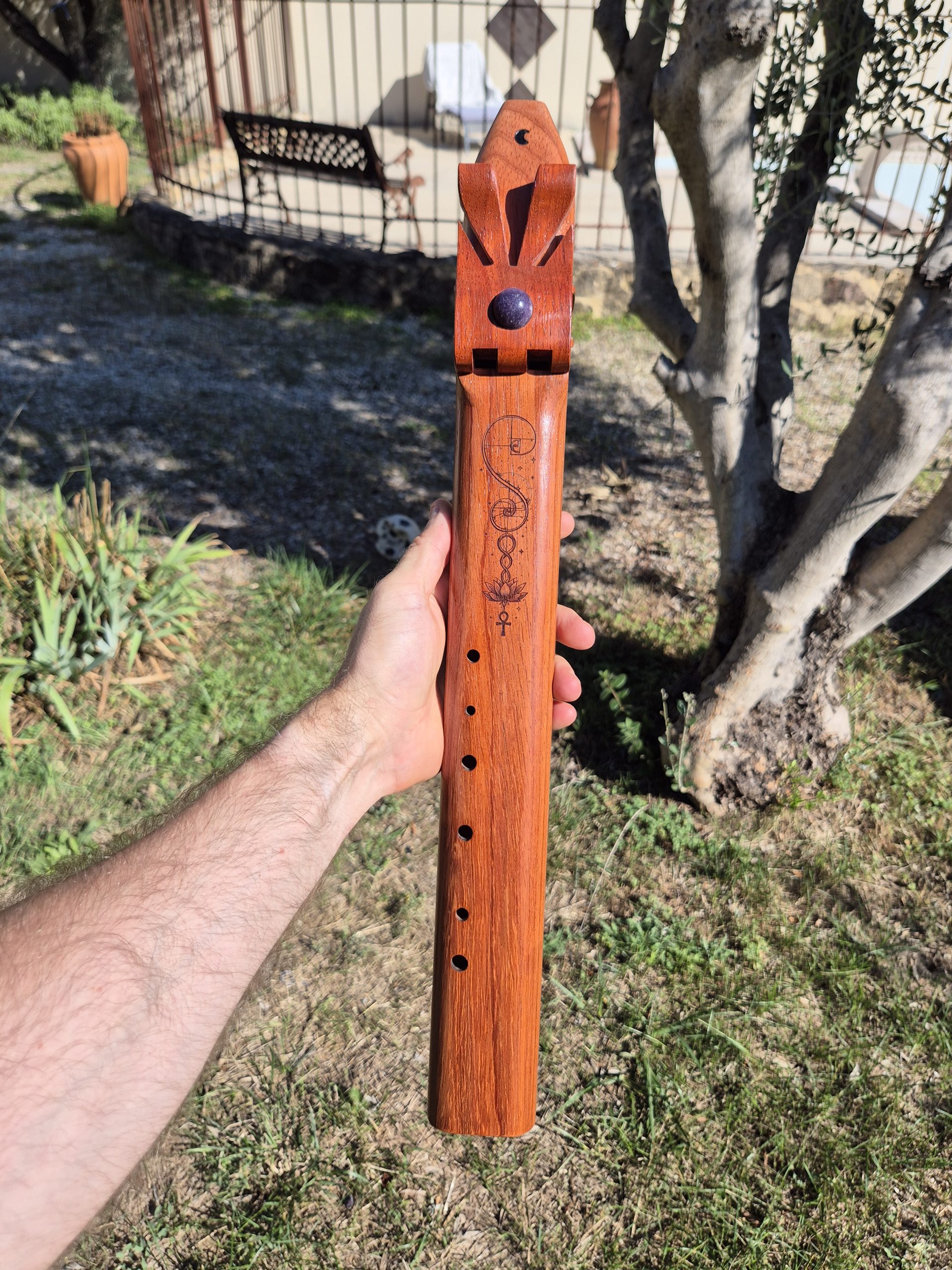
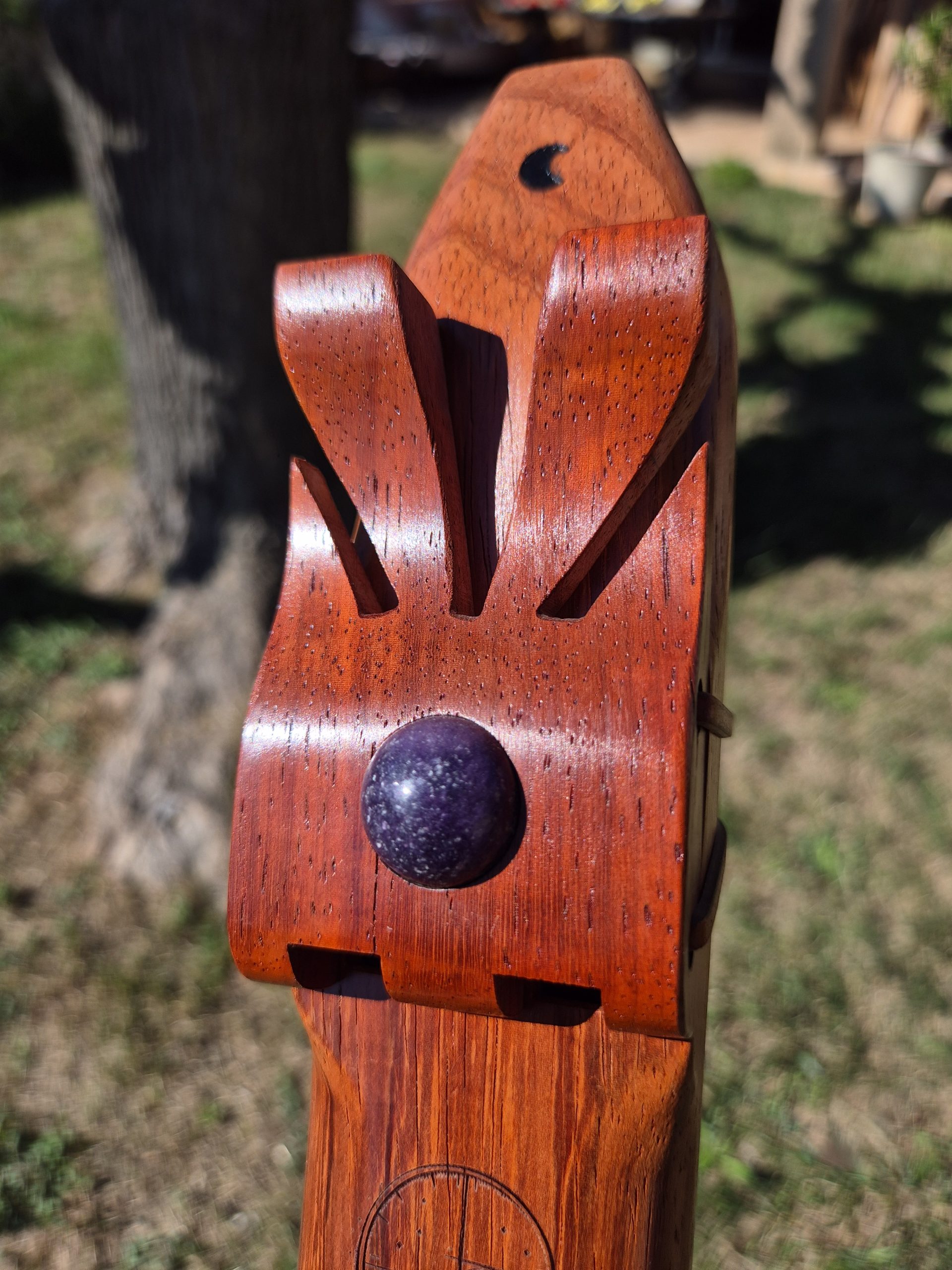
Walnut double flute with lepidolite
Walnut, walnut totem with purpleheart and madré cacao, maple, madré cacao and purpleheart mouthpiece · G · lepidolite
490 €
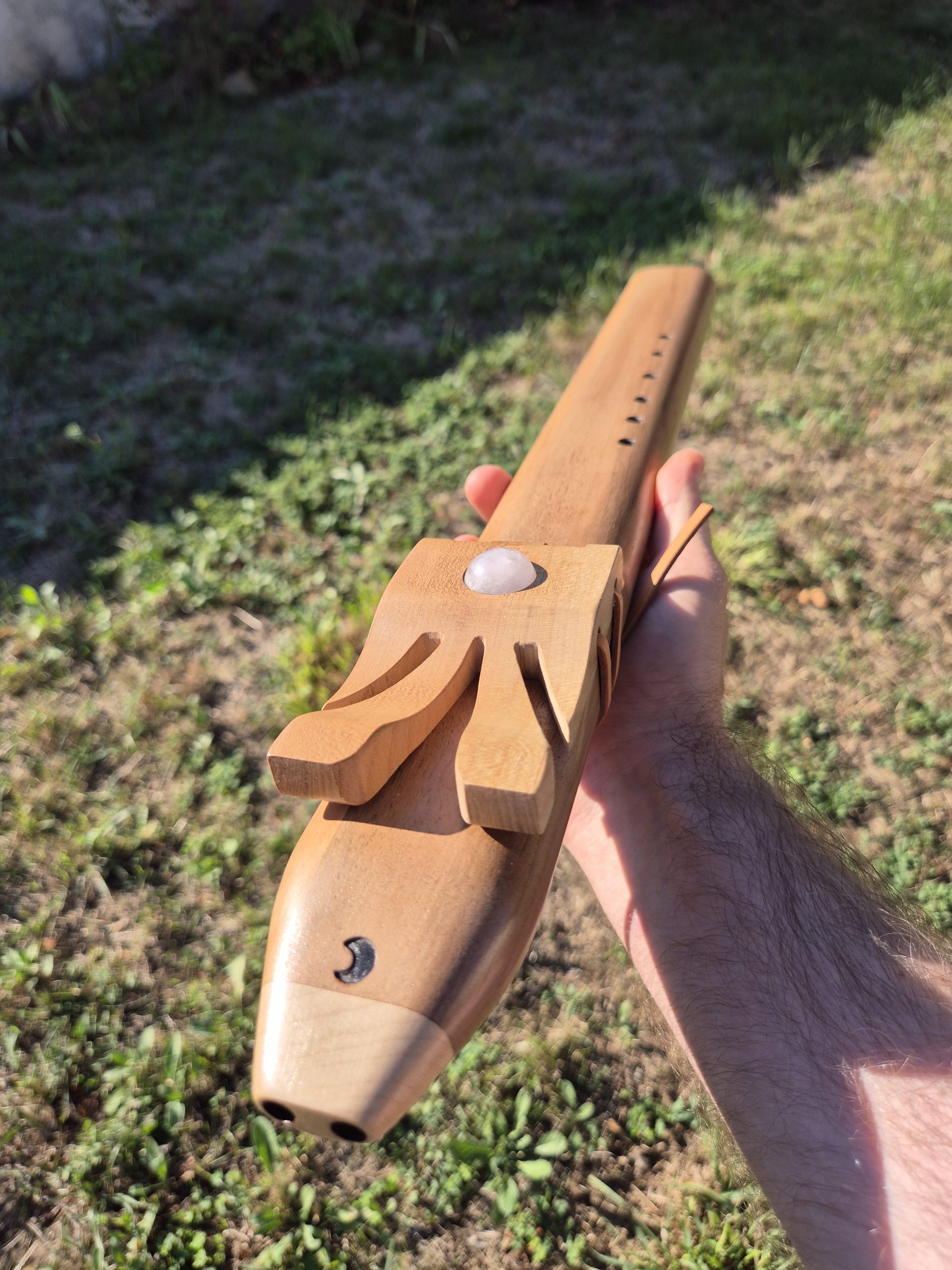 Double
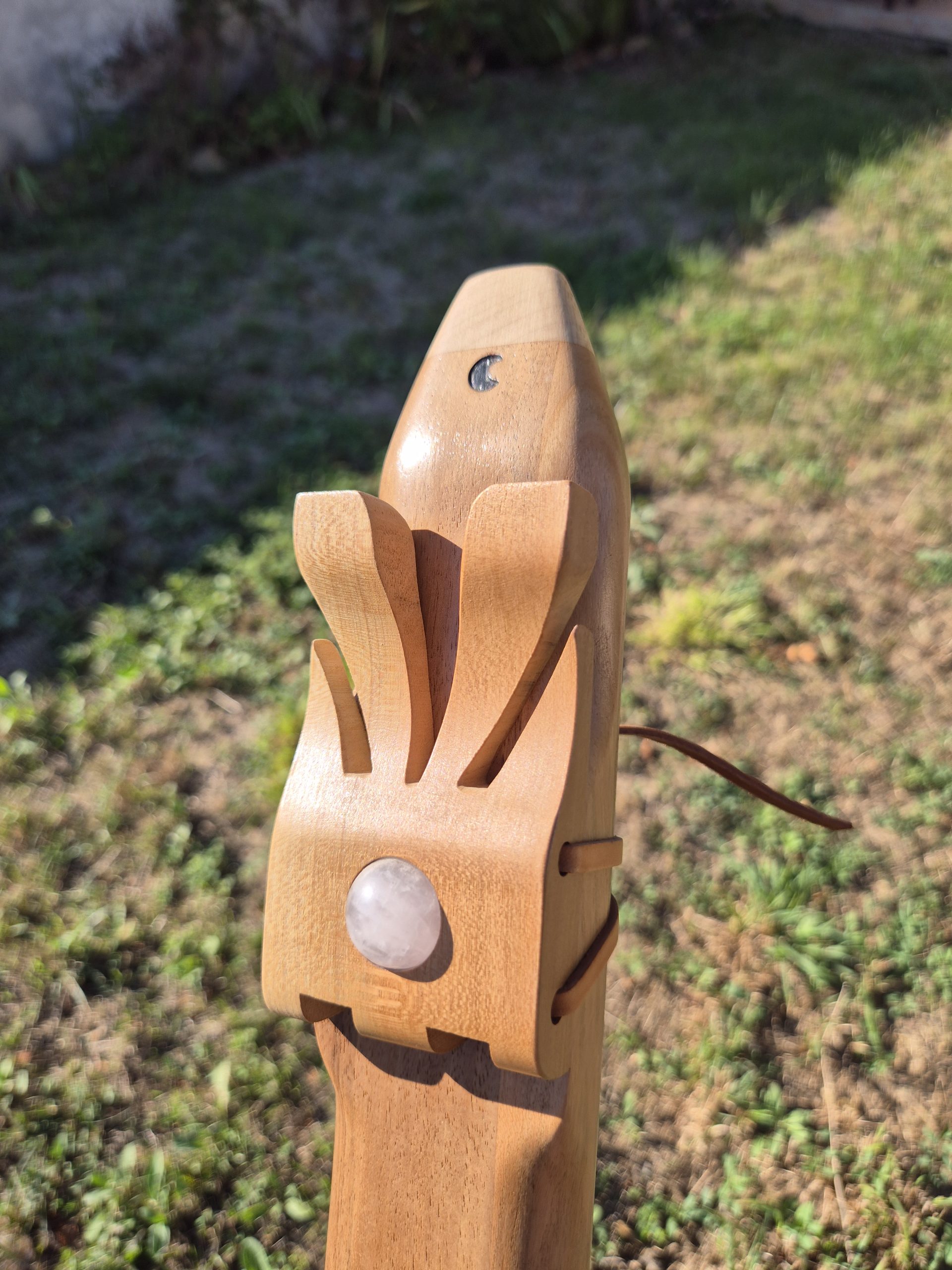
G 432 HzDouble flute
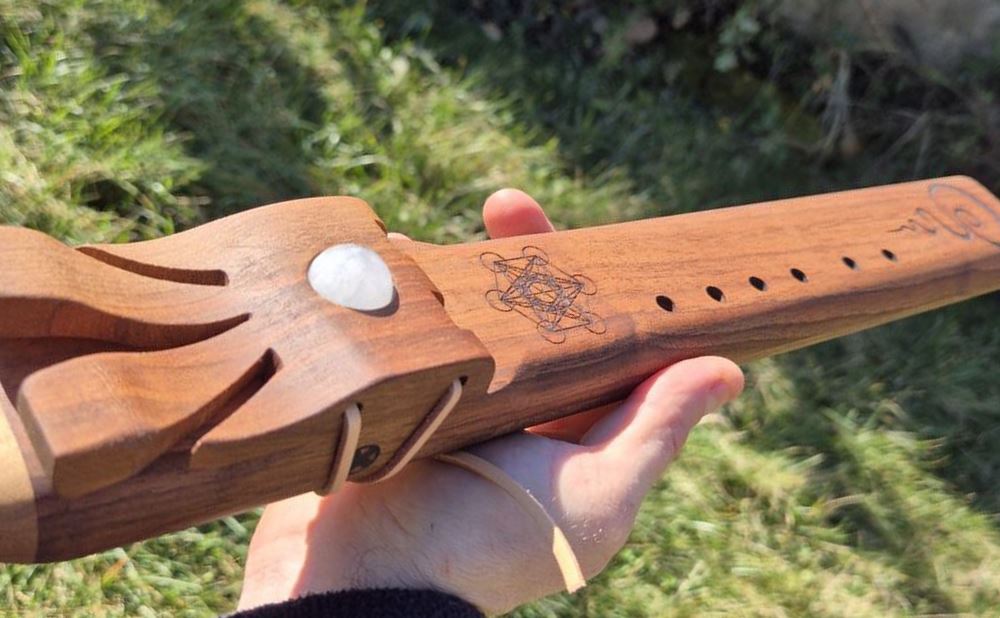
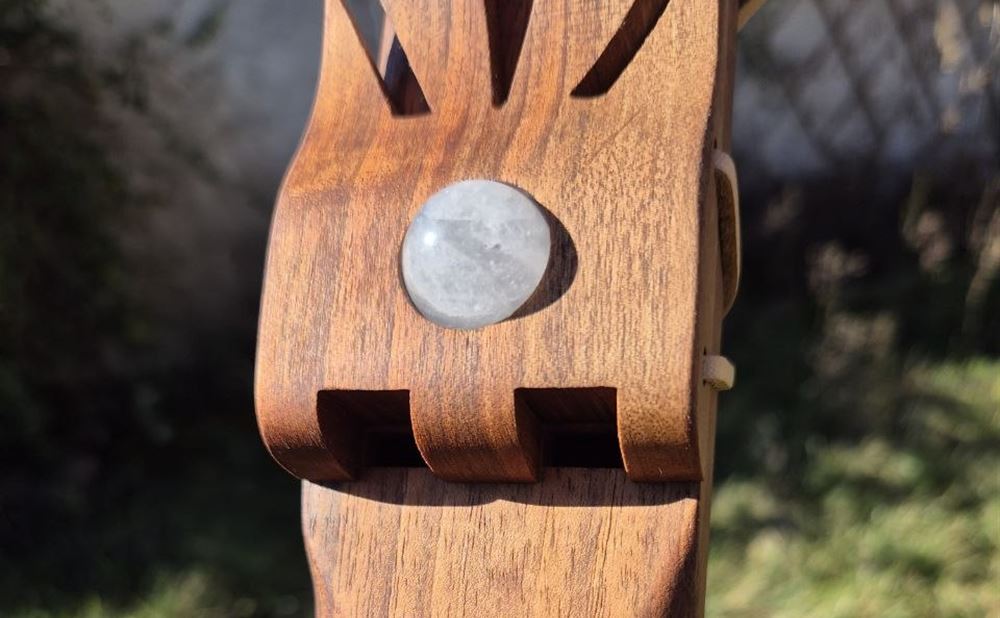
Walnut double flute with white quartz
Walnut, cherry accent stripe, maple mouthpiece · G · white quartz
417 €
 Double
400 €
 Double
393 €
 Sold
Sold
 Sold
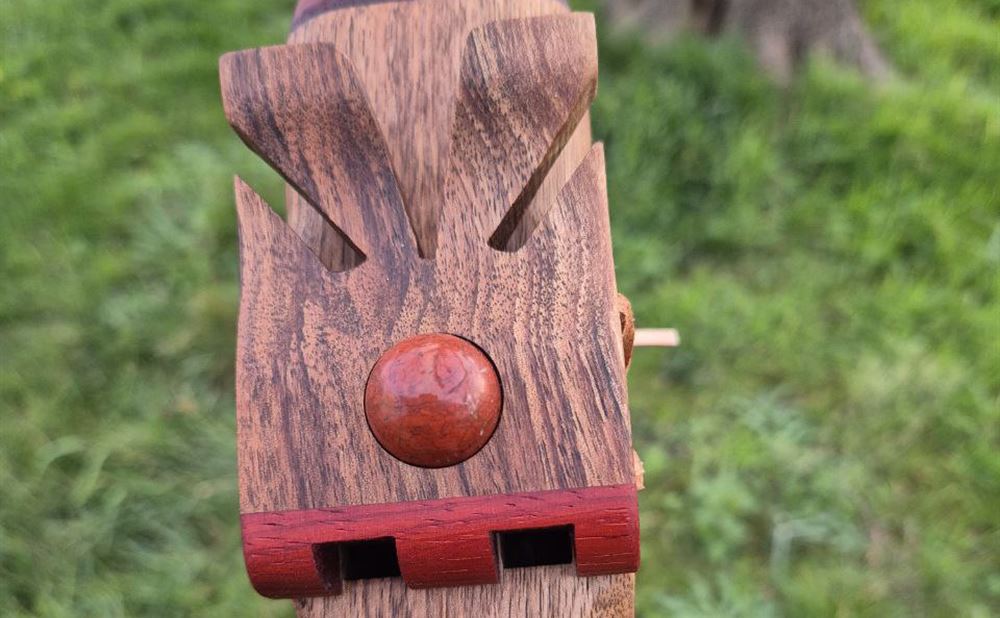
Sold
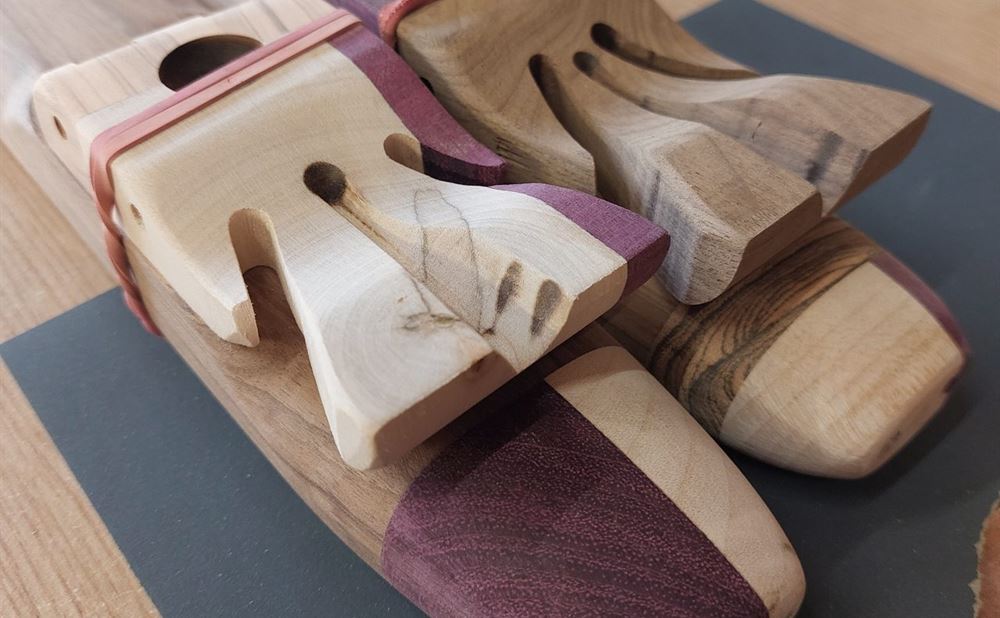 Made to order
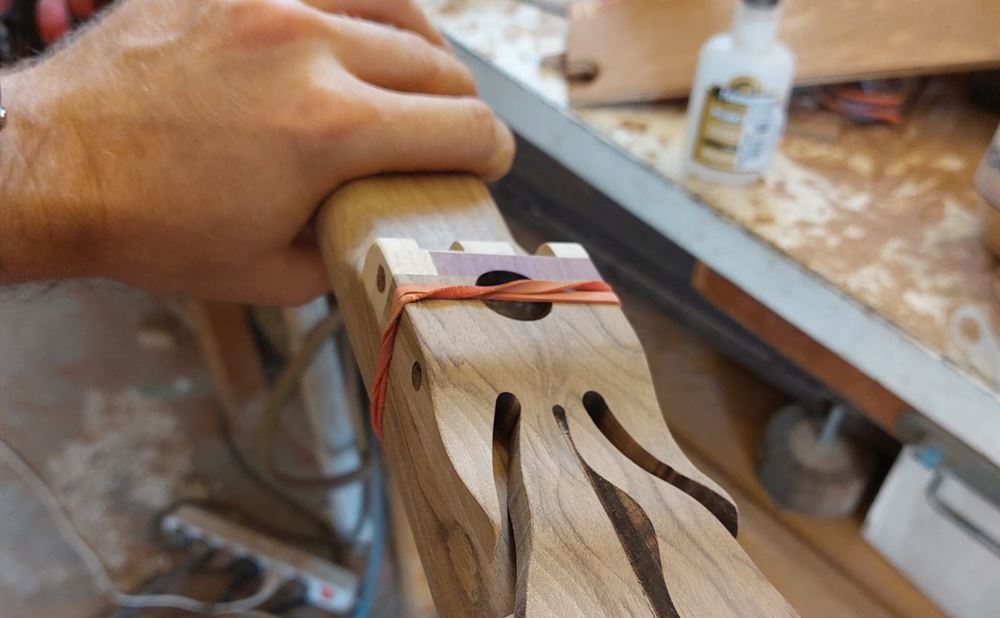
Double flute · 432 or 440 Hz
Your custom double flute
You choose the key, the drone, the woods, the stone and the engraving. About 2 months to make.
Priced on request
How it works
How does a double flute work?
To make a flute, I take two pieces of wood. In each one, I carve a half-moon channel, then I glue them one on top of the other: the two half-moons meet and form the tube where the air will sing. On a double flute, I carve two channels side by side: two tubes, so two voices.
The first tube has the holes: it plays the melody. The second is the drone: it holds a continuous note, tuned to the flute’s base note. Together, they make a fuller, more enveloping sound, like two flutes breathing with the same breath.
The two tubes share a single mouthpiece with two air inlets, one for each tube. They sit very close together, and I shape each mouthpiece to feel comfortable on the lips: blowing into both at once comes naturally. You can also make just one of them sing: the melody alone, the drone alone, or both together.
Otherwise, it plays like a single flute: same fingerings, same breath, with just a little more air when both tubes are singing.
The drones I offer
- The simple drone: a single held note, the flute’s base note.
- The fifth hole: a hole on the drone, under the little finger of the left hand. When you uncover it, the drone rises to the fifth.
- The three low notes: the drone takes up the three lowest notes of the melody, so you can play in two voices.
- The thumb hole, on Aeolian-scale doubles: a hole on the back of the drone, under the thumb, that changes the drone’s note.
Choosing well
Which double flute should you choose?
The key changes everything. A double in A sounds clear and bright, a double in F# rounder, and a low double, in D or C, deep and enveloping.
For a first double, I recommend a mid-range key, in A, G or F#: the holes stay close together, and the sound is already rich. Then it’s up to you to choose the tuning (432 or 440 Hz), the scale (minor pentatonic, Aeolian or Hijaz) and the drone that speaks to you.
Frequently asked questions
Your questions about double flutes
Another question? Write to me, I answer personally.
Is a double flute harder to play?
No. The two air inlets of the mouthpiece are very close together, and I design it to be easy to play. You play the melody with the same fingerings as a single flute; it just takes a little more breath.
Can you play a double flute with other instruments?
Yes, if you choose the right tuning: 440 Hz to play with a piano or a guitar tuned to standard pitch, 432 Hz to play alone or with instruments tuned to 432 Hz.
Why does a double flute cost more?
Because a double flute is two flutes side by side, which must sing in perfect harmony with each other. A single flute has only one channel to adjust. On a double, I tune both channels together: the drone must land exactly on the note of the melody, and both tubes must respond to the same breath. This harmony takes a great deal of precision and patience: it is the whole art of a double flute that sounds true.
How long does a custom double flute take?
About two months after your quote is approved. A 30% deposit starts the work, and the balance is paid before shipping.
Custom
Your double flute, made for you
Choose the key, the drone, the woods, the stone and the engraving. I confirm the price in writing before I start.
The fingering chart and the guide to your flute
Sign up and receive the workshop’s two PDFs (in French): fingerings for all 12 keys, adjusting the totem, and care. Then, about once a month: new flutes before anyone else, a free score by Siyotanka, a composer for the Native American flute, and the workshop’s new videos.